What is Medicare Supplemental Insurance:Is it Worth the Cost?
There has been a lot of negative attention given to Medicare Advantage (MA) plans and often for good reasons whether it’s due to the bureaucracy, delays, or denials that people in MA plans face.
So, if you want to avoid those hassles but still want to have some type of financial protection what are you supposed to do?
This is where Medicare Supplement plans come into the equation. This is a type of plan that allows you to have Medicare as your primary insurance while providing you with that financial protection that is necessary. In this article we will outline what Medicare Supplement plans are, how they work, and some pro/cons of purchasing one of these policies.
What is a Medicare Supplement Plan
What are Medicare Supplement plans well the official Medicare.gov website states that, “Medicare Supplement Insurance (Medicare Supplement) is extra insurance you can buy from a private insurance company to help pay your share of out-of-pocket costs in Original Medicare, like copayments, coinsurance, and deductibles[1].” Original Medicare is not the comprehensive zero-dollar out-of-pocket insurance that it is sometimes made out to be in the media. Medicare has deductibles for both parts A&B along with both copayments and coinsurance for many services. Additionally, original Medicare does not have an annual out-of-pocket limit which is a common feature in many health insurance plans. Due to this lack of out-of-pocket limit if a Medicare beneficiary has a year with significant health problems the cost could be substantial. These costs are what Medicare Supplement plans are designed to help with.
There are a few details that are specific to Medicare Supplements plans such as all Medicare Supplement plans are named after a letter and expect in 3 states they are all standardized.
Medicare Supplement plans are named by letter and a key detail about Medicare Supplement plans are that they are all standardized. What does this mean? The official Medicare website explains what it means when you hear that all Medicare Supplement plans are standardized, “there are 10 different types of Medicare Supplement plans offered in most states, which are named by letters: A-D, F, G, and K-N. Policies with the same letter offer the same basic benefits no matter where you live or which insurance company you buy the policy from.[2]” Since plans are standardized and that all plans of the same letter must offer the same benefits what is the difference between one Medicare Supplement plan versus another? The answer is Price. To recap a Medicare Supplement plan/ Medicare Supplement is a policy that you purchase from a private insurance company that covers the out-of-pocket expenses associated with Original Medicare. It does not replace Original Medicare it works with it.
How Does a Medicare Supplement Plan Work
Unlike Medicare Advantage plans that essentially replace Medicare, Medicare Supplements allow you to maintain Medicare as your primary insurance. The billing is straightforward and the only requirement needed to see any provider is that they accept Medicare. The billing process for Medicare Supplements works like this:
Primary Payer: When you receive care, the provider bills Original Medicare first.
Secondary Payer: Medicare pays its share of the Medicare-approved amount, then automatically forwards the remaining bill to your Medicare Supplement provider.
Final Payment: The Medicare Supplement insurer pays its required portion based on the specific plan type you selected. You only pay for any remaining uncovered items (such as the annual Part B deductible on certain plans).
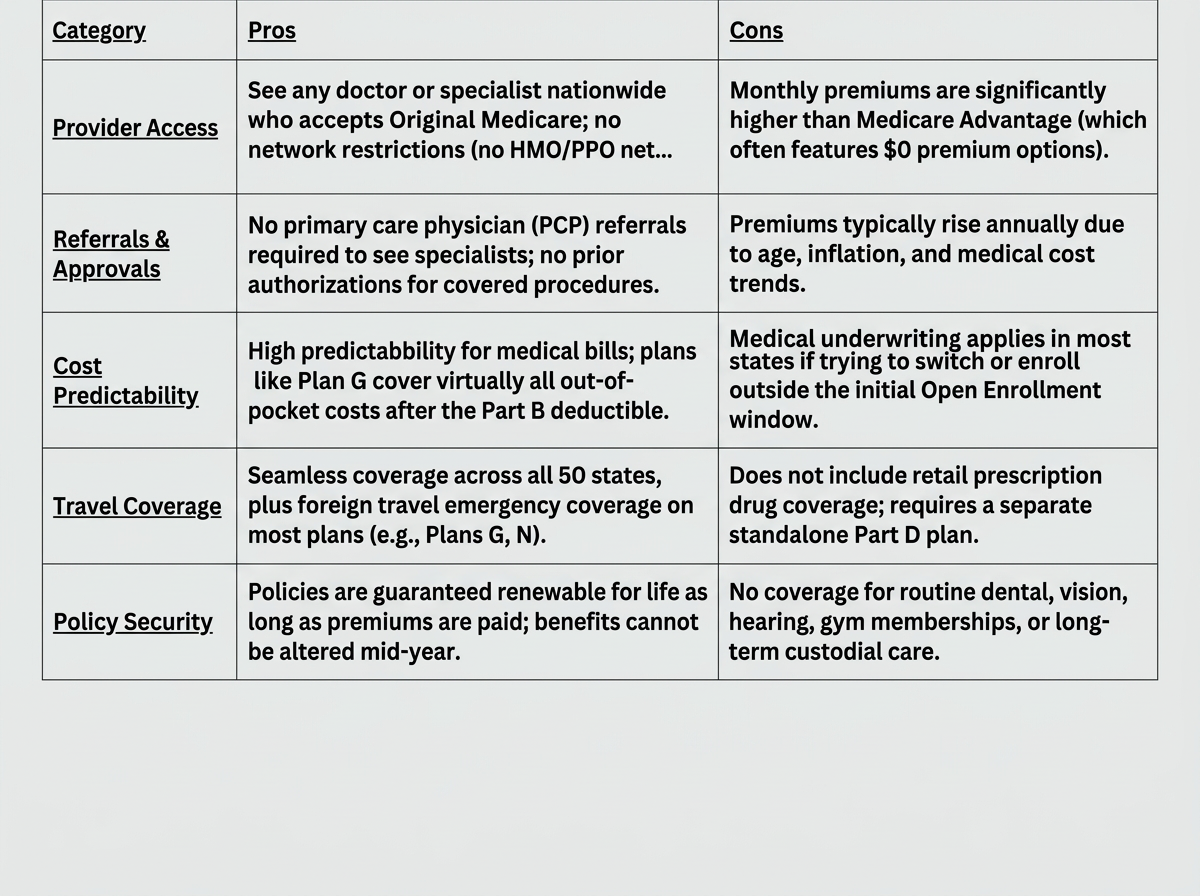
Pro/Cons of Medicare Supplement Plans
Top Advantages
Nationwide Flexibility: Because Medigap works with Original Medicare, you are not bound to a regional hospital system or provider network. If a cancer center, specialist, or hospital anywhere in the U.S. accepts Medicare, your Medigap policy works there.
Virtually Zero Surprise Bills: With comprehensive coverage (such as Plan G), your cost-sharing is capped once the annual Part B deductible is met. There are no sudden hospital daily copays, high coinsurance charges for chemotherapy/imaging, or surprise out-of-network bills.
No Administrative Friction: You do not have to wait for plan prior authorization before getting an MRI, surgery, or specialized treatment, eliminating delays common in managed care.
Main Drawbacks
Higher Fixed Monthly Costs: You must pay the Part B monthly premium, the Medigap monthly premium, and a separate Part D prescription drug premium. Over time, premium increases can strain a fixed retirement budget.
Medical Underwriting After Initial Enrollment: During the initial 6-month Medigap Open Enrollment Period (starting when you are 65+ and enrolled in Part B), approval is guaranteed regardless of health history. After that window closes, insurers in most states can decline coverage or charge significantly higher rates for pre-existing conditions.
Multiple Moving Parts: Instead of an all-in-one plan, healthcare is unbundled into three separate policies: Original Medicare (A & B), Medigap, and a standalone Part D plan, plus self-funded or private policies for routine dental and vision.